Compare
Huawei Mate 80 Pro Max Fengchi Edition vs Xiaomi 17T Pro
Pick the Huawei Mate 80 Pro Max Fengchi Edition for wireless charging, brightness; pick the Xiaomi 17T Pro for price, battery, weight, zoom.
Key differences
- The Xiaomi 17T Pro costs $779 less ($644 vs $1,424)
- The Xiaomi 17T Pro has the bigger battery: 7,000 mAh, 17% more than 6,000 mAh
- Same charging: 100 W each
- Faster wireless charging on the Huawei Mate 80 Pro Max Fengchi Edition: 80 W vs 50 W
- The Xiaomi 17T Pro is lighter: 219 g, 20 g less
- Same screen size, about 6.9″
- The Huawei Mate 80 Pro Max Fengchi Edition screen gets brighter: 8,000 nits peak vs 3,500 nits
- The Xiaomi 17T Pro zooms further: 5× optical vs 4×
- Chips: Kirin 9030 Pro in the Huawei Mate 80 Pro Max Fengchi Edition, Dimensity 9500 in the Xiaomi 17T Pro
- The Xiaomi 17T Pro is newer: 2026-06 vs 2026-03
| Spec | 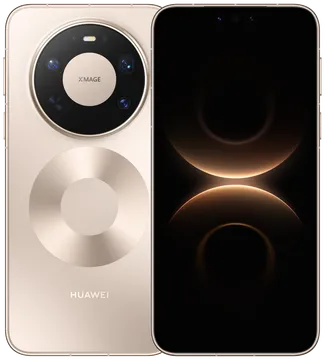 Huawei Mate 80 Pro Max Fengchi Edition | 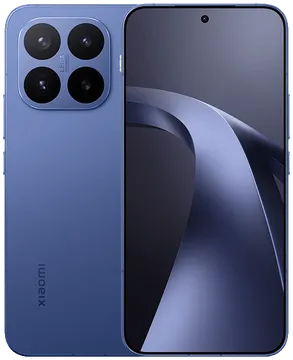 Xiaomi 17T Pro |
|---|---|---|
| Price | From $1,424 | From $644 |
| Body | ||
| Height × width × depth | 164.4 × 79 × 8.25 mm | 162.28 × 77.51 × 8.25 mm |
| Weight | 239 g | 219 g |
| Frame | — | Metal (flat-edge metal frame) |
| Water & dust | IP68 (6 m) / IP69 | IP68 |
| Colours | Polar Day Gold (极昼金), Polar Night Black (极夜黑) | Black (黑色), Nebula Purple (星云紫), Midnight Blue (午夜蓝) |
| Display | ||
| Size | 6.9″ | 6.83″ |
| Resolution | 1320x2848 | 1280x2772 |
| Pixel density | 455 ppi | 447 ppi |
| Aspect ratio | 19.4:9 | 19.5:9 |
| Refresh rate | 1-120 (LTPO) | 144 Hz |
| Peak brightness | 8,000 nits | 3,500 nits |
| Panel | Dual-layer OLED, 1440 Hz PWM, 300 Hz touch sampling, P3 | OLED flexible flat, 480 Hz touch, DC dimming |
| Protection | Kunlun Glass 2nd gen | — |
| Performance | ||
| Chip | Kirin 9030 Pro | MediaTek Dimensity 9500 |
| Process | — | 3 nm |
| CPU | — | Octa-core, up to 4.21 GHz |
| GPU | — | G1-Ultra |
| RAM + storage | 16+512 · 16+1TB | — |
| Battery & charging | ||
| Capacity | 6,000 mAh | 7,000 mAh |
| Wired charging | 100 W | 100 W |
| Wireless charging | 80 W | 50 W |
| Reverse charging | 18 W | 22.5 W |
| Cameras | ||
| Main | 50MP variable aperture f/1.4-f/4.0, OIS, RYYB (24 mm) | 50MP Light Hunter 950, 23 mm, OIS |
| Ultra-wide | 40MP f/2.2, RYYB (13 mm) | 12MP Leica |
| Telephoto | 50MP macro telephoto f/2.1, OIS, RYYB, 4x optical (90.5 mm) | 50MP Leica 5x periscope (115 mm) |
| Front | 13MP ultrawide f/2.0 AF + 3D depth camera | 32MP |
| Video | 4K (3840x2160) | 8K 30fps |
| Camera & features | ||
| Camera partner | XMAGE | Leica |
| Optical zoom | 4× | 5× |
| Lossless zoom | — | 10x optical-quality via ISZ |
| Max digital zoom | 100× | 120× |
| Camera features | 2nd-gen Red Maple native-color main camera, variable aperture f/1.4-f/4.0, telephoto macro, 1080p 960fps slow motion on all focal lengths, Video Log, HDR Vivid video, XMAGE color styles, 4K video | Leica 23mm main with Light Fusion 950 1/1.31" sensor, OIS, Leica 115mm periscope telephoto, 8K 30fps video |
| Fast-charging standard | HUAWEI SuperCharge (100W wired, 80W wireless); 18W wired reverse + wireless reverse | HyperCharge (100W PPS) |
| Charger in the box | Yes | — |
| Fingerprint | side key | optical in-display |
| Face unlock | 3D | — |
| Stereo speakers | Yes | — |
| Headphone jack | No | — |
| Memory card | No | — |
| eSIM | No | — |
| Satellite | Tiantong satellite calls + BeiDou satellite messages incl. images (BeiDou mainland China only) | — |
| Cooling | Fengchi cooling architecture with built-in bionic vortex fan and hidden exhaust | — |
| AI features | Teach Xiaoyi tasks (教小艺) / reorder (再来一单), AI one-tap video creation (AI 一键成片), AI smart follow-focus with gimbal (AI 智能追焦), AI cross-device drag-and-drop (AI 隔空传送), AI grip-aware call answering (AI 智感握姿) | — |
| Google Play | no (China ROM) | no (China ROM) |
| Other | NFC, NearLink (星闪) E2.0, dual-frequency GPS (L1+L5), IP68/IP69, Wi-Fi 7, Bluetooth 6.0, USB 3.1 Gen 1, infrared sensor, HarmonyOS 6.0, 2nd-gen Kunlun glass, up to 8000-nit peak brightness | IP68, HyperOS 3, 22.5W wired reverse charging, 7000mAh silicon-carbon battery, TÜV Rheinland eye-care display |
| Connectivity | ||
| Wi-Fi | Wi-Fi 7 (802.11a/b/g/n/ac/ax/be), 2x2 MIMO, EHT160 | Wi-Fi 7 |
| Bluetooth | 6.0 | 5.4 |
| NFC | Yes | Yes |
| USB | USB-C, USB 3.1 Gen 1 | USB-C, USB 2.0 |
| Satellite | Tiantong satellite communication + BeiDou satellite messaging | — |
| SIM | Dual nano-SIM (no eSIM) | Dual nano-SIM |
| Software & launch | ||
| OS at launch | HarmonyOS 6.0 | Xiaomi HyperOS 3 |
| Announced | 2026-03-23 | 2026-06-08 |
Questions buyers ask
Huawei Mate 80 Pro Max Fengchi Edition or Xiaomi 17T Pro: which has the bigger battery?
The Xiaomi 17T Pro has the bigger battery: 7,000 mAh, 17% more than 6,000 mAh.
Huawei Mate 80 Pro Max Fengchi Edition or Xiaomi 17T Pro: which one is cheaper?
The Xiaomi 17T Pro costs $779 less ($644 vs $1,424).
Huawei Mate 80 Pro Max Fengchi Edition or Xiaomi 17T Pro: which charges faster?
Same charging: 100 W each.
Huawei Mate 80 Pro Max Fengchi Edition or Xiaomi 17T Pro: which one is lighter?
The Xiaomi 17T Pro is lighter: 219 g, 20 g less.
Huawei Mate 80 Pro Max Fengchi Edition or Xiaomi 17T Pro: which is better for zoom photos?
The Xiaomi 17T Pro zooms further: 5× optical vs 4×.
Huawei Mate 80 Pro Max Fengchi Edition or Xiaomi 17T Pro: what chips do they use?
Chips: Kirin 9030 Pro in the Huawei Mate 80 Pro Max Fengchi Edition, Dimensity 9500 in the Xiaomi 17T Pro.
Related comparisons
Huawei Mate 80 Pro Max Fengchi Edition vs Huawei Mate 90 Pro MaxHuawei Mate 80 Pro Max Fengchi Edition vs Apple iPhone 18 ProHuawei Mate 80 Pro Max Fengchi Edition vs Honor Magic V6Huawei Mate 80 Pro Max Fengchi Edition vs Honor Robot PhoneXiaomi 17T Pro vs vivo X300 EXiaomi 17T Pro vs iQOO Neo 12Xiaomi 17T Pro vs OnePlus Ace 7Xiaomi 17T Pro vs OPPO Reno17 Pro
Specs from consumer.huawei.com, ithome.com, vmall.com and 3 more official and press pages; price checked 2026-10-27; page updated 2026-11-16.