Compare
Huawei Mate 90 Pro Max vs Redmi K90 Ultra
Pick the Huawei Mate 90 Pro Max for brightness, zoom; pick the Redmi K90 Ultra for price, battery, weight.
Key differences
- The Redmi K90 Ultra costs $869 less ($554 vs $1,424)
- The Redmi K90 Ultra has the bigger battery: 8,550 mAh, 26% more than 6,800 mAh
- Same charging: 100 W each
- The Redmi K90 Ultra is lighter: 227 g, 7 g less
- Same screen size, about 6.9″
- The Huawei Mate 90 Pro Max screen gets brighter: 12,000 nits peak vs 3,500 nits
- Only the Huawei Mate 90 Pro Max has a telephoto camera
- Chips: Kirin 9050 Pro in the Huawei Mate 90 Pro Max, Snapdragon 8 Elite in the Redmi K90 Ultra
- The Huawei Mate 90 Pro Max is newer: 2026-10 vs 2026-06
| Spec | 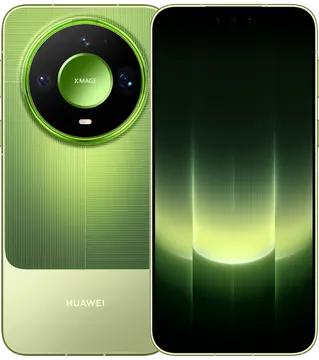 Huawei Mate 90 Pro Max | 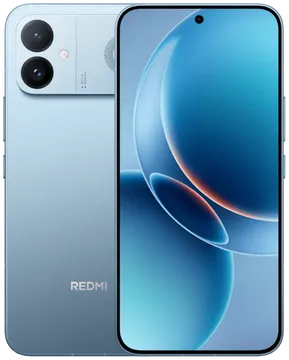 Redmi K90 Ultra |
|---|---|---|
| Price | From $1,424 | From $554 |
| Body | ||
| Height × width × depth | 164.5 × 78.7 × 8.15 mm | 162.91 × 77.93 × 8.18 mm |
| Weight | 234 g | 227 g |
| Frame | Titanium + aerospace aluminium composite | 6-series aluminium |
| Back | — | Glass fibre |
| Water & dust | IP68 (6 m) / IP69 | IP66/IP68/IP69 |
| Colours | Feilengcui Green (翡冷翠), Rose Gold (玫瑰金), Crystal Diamond White (晶钻白), Obsidian Black (曜石黑) | Space Silver (太空银), Sky Blue (天际蓝), Shadow Black (暗影黑) |
| Display | ||
| Size | 6.9″ | 6.83″ |
| Resolution | 1320x2848 | 1280x2772 |
| Pixel density | 455 ppi | 447 ppi |
| Aspect ratio | 19.4:9 | 19.5:9 |
| Refresh rate | 1-120 (LTPO) | 165 Hz |
| Peak brightness | 12,000 nits | 3,500 nits |
| Panel | Dual-layer OLED, 1440 Hz PWM, 300 Hz touch sampling, BT.2020 | AMOLED flat, 480 Hz touch, 12-bit, P3, DC dimming |
| Protection | Kunlun Glass 3rd gen | Corning Gorilla Glass 7i |
| Performance | ||
| Chip | Kirin 9050 (12GB) / Kirin 9050 Pro (16GB) | Snapdragon 8 Elite (骁龙8至尊版 |
| Extra chips | — | D2 gaming chip |
| Process | — | 3 nm |
| CPU | — | Octa-core, up to 4.32 GHz |
| GPU | — | Adreno |
| RAM + storage | 12+512 · 16+512 | — |
| Battery & charging | ||
| Capacity | 6,800 mAh | 8,550 mAh |
| Wired charging | 100 W | 100 W |
| Wireless charging | 50 W | — |
| Reverse charging | 18 W | 22.5 W |
| Cameras | ||
| Main | 50MP variable aperture f/1.4-f/4.0, OIS, RYYB (24 mm) | 50MP Light Hunter 800, 1/1.55", f/1.68, 3-axis OIS |
| Ultra-wide | 40MP f/2.2, RYYB (13 mm) | 8MP, 1/4", f/2.2 |
| Telephoto | 200MP large-sensor telephoto f/2.6, OIS, macro, RYYB, 4x optical (89 mm) | — |
| Front | 13MP ultrawide f/2.0 AF + 3D depth camera | 20MP |
| Video | 4K (3840x2160) | 8K 30fps |
| Camera & features | ||
| Camera partner | XMAGE | — |
| Optical zoom | 4× | — |
| Lossless zoom | 8x optical-quality zoom | 2x lossless zoom (2X 无损变焦) |
| Max digital zoom | 100× | 20× |
| Camera features | 200MP large-sensor telephoto with macro, 18 EV dynamic range main camera (lab), variable aperture f/1.4-f/4.0, Video Log, HDR Vivid video, 20x telephoto video, 4K video | 50MP Light Hunter 800 main 1/1.55" f/1.68, 8MP ultrawide, 8K 30fps video, HDR10+ |
| Fast-charging standard | HUAWEI SuperCharge (wired 100W, wireless 50W); 18W wired reverse + wireless reverse | Xiaomi HyperCharge; PD3.0 |
| Charger in the box | Yes | Yes |
| Fingerprint | side key | ultrasonic in-display (3D) |
| Face unlock | 3D | — |
| Stereo speakers | Yes | Yes |
| Headphone jack | No | — |
| IR blaster | No | Yes |
| Memory card | No | — |
| eSIM | Yes | — |
| Satellite | BeiDou satellite messages incl. images (mainland China only) | — |
| Haptics | — | X-axis linear motor |
| Cooling | — | active fan cooling (18.1mm fan, 3 fan modes) + 6000mm² cold pump |
| AI features | Xiaoyi note-taking (小艺帮记), Xiaoyi calls: AI call answering, real-time call translation, call summaries (小艺通话), one-sentence photo editing (一句话修图), one-sentence video creation (一句话成片), AI composition and pose suggestions | AI gaming graphics chip D2 (super-resolution / frame interpolation / super HDR), AI gesture recognition for antenna optimisation |
| Google Play | no (China ROM) | no (China ROM) |
| Other | NFC, NearLink (星闪) E2.0, dual-frequency GPS (L1+L5), 4 numbers (2 nano-SIM + 2 eSIM), 3 active, IP68/IP69, Wi-Fi 7, Bluetooth 6.0, HarmonyOS 7.0, Kunlun glass, emergency call via linked watch | built-in cooling fan (fan rated IPX8/IPX9), 165Hz display, NFC, Surge T1+ signal chip, IP66/IP68/IP69, 22.5W wired reverse charging, 8550mAh battery, fan cleaning brush in box |
| Connectivity | ||
| 5G | — | n1/n3/n5/n7/n8/n28/n66/n38/n40/n41/n48/n77/n78 |
| Wi-Fi | Wi-Fi 7 (802.11a/b/g/n/ac/ax/be), 2x2 MIMO, EHT160 | Wi-Fi 7 |
| Bluetooth | 6.0 (LDAC, L2HC) | 5.4 |
| NFC | Yes | Yes |
| USB | USB-C, USB 3.1 Gen 1 | — |
| Satellite | BeiDou satellite messaging (mainland China only) | — |
| SIM | Dual nano-SIM + eSIM (up to 2 eSIM numbers) | — |
| Software & launch | ||
| OS at launch | HarmonyOS 7.0 | Xiaomi HyperOS 3 |
| Announced | 2026-10-01 | 2026-06-30 |
| Released | 2026-10-01 | — |
Questions buyers ask
Huawei Mate 90 Pro Max or Redmi K90 Ultra: which has the bigger battery?
The Redmi K90 Ultra has the bigger battery: 8,550 mAh, 26% more than 6,800 mAh.
Huawei Mate 90 Pro Max or Redmi K90 Ultra: which one is cheaper?
The Redmi K90 Ultra costs $869 less ($554 vs $1,424).
Huawei Mate 90 Pro Max or Redmi K90 Ultra: which charges faster?
Same charging: 100 W each.
Huawei Mate 90 Pro Max or Redmi K90 Ultra: which one is lighter?
The Redmi K90 Ultra is lighter: 227 g, 7 g less.
Huawei Mate 90 Pro Max or Redmi K90 Ultra: which is better for zoom photos?
Only the Huawei Mate 90 Pro Max has a telephoto camera.
Huawei Mate 90 Pro Max or Redmi K90 Ultra: what chips do they use?
Chips: Kirin 9050 Pro in the Huawei Mate 90 Pro Max, Snapdragon 8 Elite in the Redmi K90 Ultra.
Related comparisons
Huawei Mate 90 Pro Max vs Huawei Mate 80 Pro Max Fengchi EditionHuawei Mate 90 Pro Max vs Apple iPhone 18 ProHuawei Mate 90 Pro Max vs Honor Magic V6Huawei Mate 90 Pro Max vs Honor Robot PhoneRedmi K90 Ultra vs OPPO Reno16tRedmi K90 Ultra vs OPPO Reno17Redmi K90 Ultra vs vivo S60Redmi K90 Ultra vs Honor 600 Pro
Specs from consumer.huawei.com, i.ifeng.com, ithome.com and 3 more official and press pages; price checked 2026-10-27; page updated 2026-11-16.