Compare
Huawei Mate 90 Pro Max vs Redmi Turbo 5
Pick the Huawei Mate 90 Pro Max for brightness, zoom; pick the Redmi Turbo 5 for price, battery, weight.
Key differences
- The Redmi Turbo 5 costs $1,034 less ($390 vs $1,424)
- The Redmi Turbo 5 has the bigger battery: 7,560 mAh, 11% more than 6,800 mAh
- Same charging: 100 W each
- The Redmi Turbo 5 is lighter: 204 g, 30 g less
- The Huawei Mate 90 Pro Max has the bigger screen (6.9″ vs 6.59″); the Redmi Turbo 5 is easier one-handed
- The Huawei Mate 90 Pro Max screen gets brighter: 12,000 nits peak vs 3,500 nits
- Only the Huawei Mate 90 Pro Max has a telephoto camera
- Chips: Kirin 9050 Pro in the Huawei Mate 90 Pro Max, Dimensity 8500 in the Redmi Turbo 5
- The Huawei Mate 90 Pro Max is newer: 2026-10 vs 2026-01
| Spec | 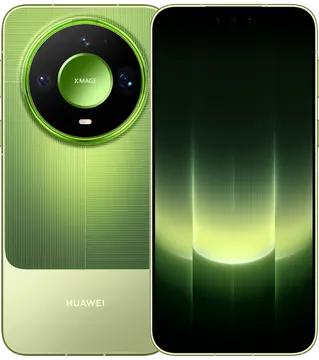 Huawei Mate 90 Pro Max | 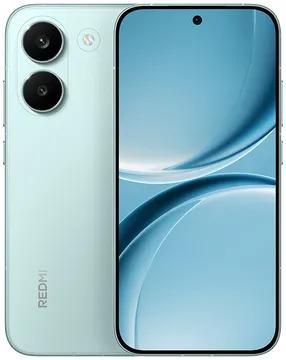 Redmi Turbo 5 |
|---|---|---|
| Price | From $1,424 | From $390 |
| Body | ||
| Height × width × depth | 164.5 × 78.7 × 8.15 mm | 157.53 × 75.19 × 8.18 mm |
| Weight | 234 g | 204 g |
| Frame | Titanium + aerospace aluminium composite | 6-series aluminium |
| Back | — | Glass |
| Water & dust | IP68 (6 m) / IP69 | IP66/IP68/IP69/IP69K |
| Colours | Feilengcui Green (翡冷翠), Rose Gold (玫瑰金), Crystal Diamond White (晶钻白), Obsidian Black (曜石黑) | Shadow Black (暗影黑), Auspicious Cloud White (祥云白), Shallow Sea Cyan (浅海青) |
| Display | ||
| Size | 6.9″ | 6.59″ |
| Resolution | 1320x2848 | 1268x2756 |
| Pixel density | 455 ppi | 460 ppi |
| Aspect ratio | 19.4:9 | 19.6:9 |
| Refresh rate | 1-120 (LTPO) | 120 Hz |
| Peak brightness | 12,000 nits | 3,500 nits |
| Panel | Dual-layer OLED, 1440 Hz PWM, 300 Hz touch sampling, BT.2020 | AMOLED flat, 480 Hz touch, 12-bit, 3840 Hz PWM + DC |
| Protection | Kunlun Glass 3rd gen | Corning Gorilla Glass 7i |
| Performance | ||
| Chip | Kirin 9050 (12GB) / Kirin 9050 Pro (16GB) | MediaTek Dimensity 8500-Ultra |
| Process | — | 4 nm |
| CPU | — | Octa-core, up to 3.4 GHz |
| GPU | — | Mali-G720 MC8 |
| RAM + storage | 12+512 · 16+512 | — |
| Battery & charging | ||
| Capacity | 6,800 mAh | 7,560 mAh |
| Wired charging | 100 W | 100 W |
| Wireless charging | 50 W | — |
| Reverse charging | 18 W | 27 W |
| Cameras | ||
| Main | 50MP variable aperture f/1.4-f/4.0, OIS, RYYB (24 mm) | 50MP Sony IMX882, 1/1.95", f/1.5, OIS |
| Ultra-wide | 40MP f/2.2, RYYB (13 mm) | 8MP, 1/4", f/2.2 |
| Telephoto | 200MP large-sensor telephoto f/2.6, OIS, macro, RYYB, 4x optical (89 mm) | — |
| Front | 13MP ultrawide f/2.0 AF + 3D depth camera | 20MP |
| Video | 4K (3840x2160) | 4K 60fps |
| Camera & features | ||
| Camera partner | XMAGE | — |
| Optical zoom | 4× | — |
| Lossless zoom | 8x optical-quality zoom | 2x lossless zoom (2X 无损变焦) |
| Max digital zoom | 100× | 10× |
| Camera features | 200MP large-sensor telephoto with macro, 18 EV dynamic range main camera (lab), variable aperture f/1.4-f/4.0, Video Log, HDR Vivid video, 20x telephoto video, 4K video | 50MP Sony IMX882 main 1/1.95", OIS, 8MP ultrawide, 4K 60fps video |
| Fast-charging standard | HUAWEI SuperCharge (wired 100W, wireless 50W); 18W wired reverse + wireless reverse | Xiaomi HyperCharge; universal fast-charging protocol, bypass charging |
| Charger in the box | Yes | Yes |
| Fingerprint | side key | optical in-display |
| Face unlock | 3D | — |
| Stereo speakers | Yes | Yes |
| Headphone jack | No | — |
| IR blaster | No | — |
| Memory card | No | — |
| eSIM | Yes | — |
| Satellite | BeiDou satellite messages incl. images (mainland China only) | — |
| Cooling | — | 3D IceLoop cooling (dual-step LHP) with AI temperature control |
| AI features | Xiaoyi note-taking (小艺帮记), Xiaoyi calls: AI call answering, real-time call translation, call summaries (小艺通话), one-sentence photo editing (一句话修图), one-sentence video creation (一句话成片), AI composition and pose suggestions | AI portrait retouch, AI flare removal, AI smart edits (AI 智能成片), AI video editing, AI greeting video / card generation |
| Google Play | no (China ROM) | no (China ROM) |
| Other | NFC, NearLink (星闪) E2.0, dual-frequency GPS (L1+L5), 4 numbers (2 nano-SIM + 2 eSIM), 3 active, IP68/IP69, Wi-Fi 7, Bluetooth 6.0, HarmonyOS 7.0, Kunlun glass, emergency call via linked watch | IP66/IP68/IP69/IP69K, bypass charging, 27W wired reverse charging, 7560mAh battery |
| Connectivity | ||
| Wi-Fi | Wi-Fi 7 (802.11a/b/g/n/ac/ax/be), 2x2 MIMO, EHT160 | Wi-Fi 6 |
| Bluetooth | 6.0 (LDAC, L2HC) | 5.4 |
| NFC | Yes | Yes |
| USB | USB-C, USB 3.1 Gen 1 | — |
| Satellite | BeiDou satellite messaging (mainland China only) | — |
| SIM | Dual nano-SIM + eSIM (up to 2 eSIM numbers) | — |
| Software & launch | ||
| OS at launch | HarmonyOS 7.0 | Xiaomi HyperOS 3 |
| Announced | 2026-10-01 | 2026-01-29 |
| Released | 2026-10-01 | — |
Questions buyers ask
Huawei Mate 90 Pro Max or Redmi Turbo 5: which has the bigger battery?
The Redmi Turbo 5 has the bigger battery: 7,560 mAh, 11% more than 6,800 mAh.
Huawei Mate 90 Pro Max or Redmi Turbo 5: which one is cheaper?
The Redmi Turbo 5 costs $1,034 less ($390 vs $1,424).
Huawei Mate 90 Pro Max or Redmi Turbo 5: which charges faster?
Same charging: 100 W each.
Huawei Mate 90 Pro Max or Redmi Turbo 5: which one is lighter?
The Redmi Turbo 5 is lighter: 204 g, 30 g less.
Huawei Mate 90 Pro Max or Redmi Turbo 5: which is better for zoom photos?
Only the Huawei Mate 90 Pro Max has a telephoto camera.
Huawei Mate 90 Pro Max or Redmi Turbo 5: what chips do they use?
Chips: Kirin 9050 Pro in the Huawei Mate 90 Pro Max, Dimensity 8500 in the Redmi Turbo 5.
Related comparisons
Huawei Mate 90 Pro Max vs Huawei Mate 80 Pro Max Fengchi EditionHuawei Mate 90 Pro Max vs Apple iPhone 18 ProHuawei Mate 90 Pro Max vs Honor Magic V6Huawei Mate 90 Pro Max vs Honor Robot PhoneRedmi Turbo 5 vs Honor 600 Genki EditionRedmi Turbo 5 vs vivo S60 元气版Redmi Turbo 5 vs Samsung Galaxy A37 5GRedmi Turbo 5 vs Honor 600 Super Edition
Specs from consumer.huawei.com, i.ifeng.com, ithome.com and 3 more official and press pages; price checked 2026-10-27; page updated 2026-11-16.