Compare
Huawei Mate 90 Pro Max vs Xiaomi 17T
Pick the Huawei Mate 90 Pro Max for charging, brightness; pick the Xiaomi 17T for price, weight, zoom.
Key differences
- The Xiaomi 17T costs $899 less ($524 vs $1,424)
- Similar battery: 6,800 mAh vs 7,000 mAh
- The Huawei Mate 90 Pro Max charges faster: 100 W wired vs 67 W
- The Xiaomi 17T is lighter: 203 g, 31 g less
- The Huawei Mate 90 Pro Max has the bigger screen (6.9″ vs 6.59″); the Xiaomi 17T is easier one-handed
- The Huawei Mate 90 Pro Max screen gets brighter: 12,000 nits peak vs 3,500 nits
- The Xiaomi 17T zooms further: 5× optical vs 4×
- Chips: Kirin 9050 Pro in the Huawei Mate 90 Pro Max, Dimensity 8500 in the Xiaomi 17T
- The Huawei Mate 90 Pro Max is newer: 2026-10 vs 2026-06
| Spec | 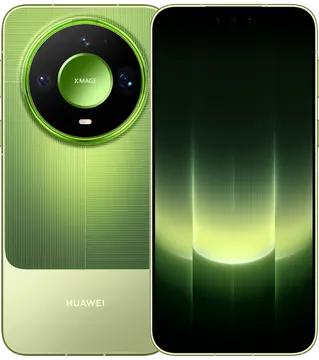 Huawei Mate 90 Pro Max | 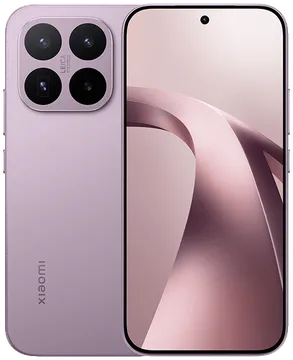 Xiaomi 17T |
|---|---|---|
| Price | From $1,424 | From $524 |
| Body | ||
| Height × width × depth | 164.5 × 78.7 × 8.15 mm | 157.63 × 75.19 × 8.17 mm |
| Weight | 234 g | 203 g |
| Frame | Titanium + aerospace aluminium composite | — |
| Water & dust | IP68 (6 m) / IP69 | IP68 |
| Colours | Feilengcui Green (翡冷翠), Rose Gold (玫瑰金), Crystal Diamond White (晶钻白), Obsidian Black (曜石黑) | Black (黑色), Ice Berry Purple (冰莓紫), Iridescent White (幻彩白) |
| Display | ||
| Size | 6.9″ | 6.59″ |
| Resolution | 1320x2848 | 1268x2756 |
| Pixel density | 455 ppi | 460 ppi |
| Aspect ratio | 19.4:9 | 19.6:9 |
| Refresh rate | 1-120 (LTPO) | 120 Hz |
| Peak brightness | 12,000 nits | 3,500 nits |
| Panel | Dual-layer OLED, 1440 Hz PWM, 300 Hz touch sampling, BT.2020 | OLED flexible flat, 480 Hz touch, 3840 Hz PWM |
| Protection | Kunlun Glass 3rd gen | — |
| Performance | ||
| Chip | Kirin 9050 (12GB) / Kirin 9050 Pro (16GB) | MediaTek Dimensity 8500-Ultra |
| Process | — | 4 nm |
| CPU | — | Octa-core, up to 3.4 GHz |
| GPU | — | Mali-G720 |
| RAM + storage | 12+512 · 16+512 | 12+256 · 12+512 |
| Battery & charging | ||
| Capacity | 6,800 mAh | 7,000 mAh |
| Wired charging | 100 W | 67 W |
| Wireless charging | 50 W | — |
| Reverse charging | 18 W | 22.5 W |
| Cameras | ||
| Main | 50MP variable aperture f/1.4-f/4.0, OIS, RYYB (24 mm) | 50MP Light Hunter 800, OIS, 1G+6P |
| Ultra-wide | 40MP f/2.2, RYYB (13 mm) | 12MP Leica |
| Telephoto | 200MP large-sensor telephoto f/2.6, OIS, macro, RYYB, 4x optical (89 mm) | 50MP Leica 5x periscope (115 mm) |
| Front | 13MP ultrawide f/2.0 AF + 3D depth camera | 32MP |
| Video | 4K (3840x2160) | 4K 60fps |
| Camera & features | ||
| Camera partner | XMAGE | Leica |
| Optical zoom | 4× | 5× |
| Lossless zoom | 8x optical-quality zoom | 10x lossless zoom (10X 无损变焦), plus UltraZoom |
| Max digital zoom | 100× | — |
| Camera features | 200MP large-sensor telephoto with macro, 18 EV dynamic range main camera (lab), variable aperture f/1.4-f/4.0, Video Log, HDR Vivid video, 20x telephoto video, 4K video | 50MP Light Hunter 800 main f/1.7, OIS, Leica 50MP 5x periscope telephoto (115mm), OIS, 12MP Leica ultrawide 120°, 4K 60fps video, HDR10+ |
| Fast-charging standard | HUAWEI SuperCharge (wired 100W, wireless 50W); 18W wired reverse + wireless reverse | Xiaomi HyperCharge; PD3.0, PPS 50W |
| Charger in the box | Yes | Yes |
| Fingerprint | side key | optical in-display |
| Face unlock | 3D | — |
| Stereo speakers | Yes | Yes |
| Headphone jack | No | — |
| IR blaster | No | Yes |
| Memory card | No | — |
| eSIM | Yes | — |
| Satellite | BeiDou satellite messages incl. images (mainland China only) | — |
| Haptics | — | X-axis linear motor |
| Cooling | — | large-area cooling with high-density capillary structure |
| AI features | Xiaoyi note-taking (小艺帮记), Xiaoyi calls: AI call answering, real-time call translation, call summaries (小艺通话), one-sentence photo editing (一句话修图), one-sentence video creation (一句话成片), AI composition and pose suggestions | — |
| Google Play | no (China ROM) | no (China ROM) |
| Other | NFC, NearLink (星闪) E2.0, dual-frequency GPS (L1+L5), 4 numbers (2 nano-SIM + 2 eSIM), 3 active, IP68/IP69, Wi-Fi 7, Bluetooth 6.0, HarmonyOS 7.0, Kunlun glass, emergency call via linked watch | IP68, dual-frequency GPS (L1+L5), 22.5W wired reverse charging, 7000mAh battery |
| Connectivity | ||
| Wi-Fi | Wi-Fi 7 (802.11a/b/g/n/ac/ax/be), 2x2 MIMO, EHT160 | Wi-Fi 6 |
| Bluetooth | 6.0 (LDAC, L2HC) | 5.4 |
| NFC | Yes | Yes |
| USB | USB-C, USB 3.1 Gen 1 | USB-C, USB 2.0 |
| Satellite | BeiDou satellite messaging (mainland China only) | — |
| SIM | Dual nano-SIM + eSIM (up to 2 eSIM numbers) | Dual nano-SIM |
| Software & launch | ||
| OS at launch | HarmonyOS 7.0 | Xiaomi HyperOS 3 |
| Announced | 2026-10-01 | 2026-06-08 |
| Released | 2026-10-01 | — |
Questions buyers ask
Huawei Mate 90 Pro Max or Xiaomi 17T: which has the bigger battery?
Similar battery: 6,800 mAh vs 7,000 mAh.
Huawei Mate 90 Pro Max or Xiaomi 17T: which one is cheaper?
The Xiaomi 17T costs $899 less ($524 vs $1,424).
Huawei Mate 90 Pro Max or Xiaomi 17T: which charges faster?
The Huawei Mate 90 Pro Max charges faster: 100 W wired vs 67 W.
Huawei Mate 90 Pro Max or Xiaomi 17T: which one is lighter?
The Xiaomi 17T is lighter: 203 g, 31 g less.
Huawei Mate 90 Pro Max or Xiaomi 17T: which is better for zoom photos?
The Xiaomi 17T zooms further: 5× optical vs 4×.
Huawei Mate 90 Pro Max or Xiaomi 17T: what chips do they use?
Chips: Kirin 9050 Pro in the Huawei Mate 90 Pro Max, Dimensity 8500 in the Xiaomi 17T.
Related comparisons
Specs from consumer.huawei.com, i.ifeng.com, ithome.com and 4 more official and press pages; price checked 2026-10-27; page updated 2026-11-16.