Compare
Huawei Mate 90 Pro vs Redmi K90 Max
Pick the Huawei Mate 90 Pro for brightness, zoom; pick the Redmi K90 Max for price, battery.
Key differences
- The Redmi K90 Max costs $465 less ($584 vs $1,049)
- The Redmi K90 Max has the bigger battery: 8,550 mAh, 30% more than 6,600 mAh
- Same charging: 100 W each
- Similar weight: 222 g vs 227 g
- Same screen size, about 6.75″
- The Huawei Mate 90 Pro screen gets brighter: 12,000 nits peak vs 3,500 nits
- Only the Huawei Mate 90 Pro has a telephoto camera
- Chips: Kirin 9035 in the Huawei Mate 90 Pro, Dimensity 9500 in the Redmi K90 Max
- The Huawei Mate 90 Pro is newer: 2026-10 vs 2026-04
| Spec | 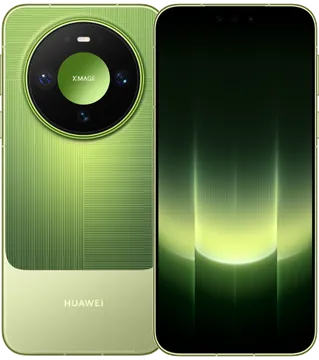 Huawei Mate 90 Pro | 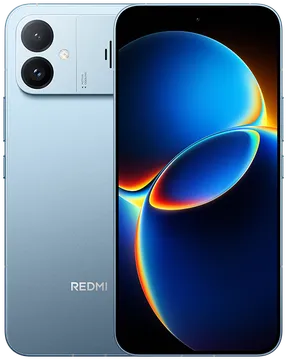 Redmi K90 Max |
|---|---|---|
| Price | From $1,049 | From $584 |
| Body | ||
| Height × width × depth | 161.9 × 75.7 × 7.95 mm | 162.91 × 77.93 × 8.18 mm |
| Weight | 222 g | 227 g |
| Water & dust | IP68 (6 m) / IP69 | IP66/IP68/IP69 |
| Colours | Feilengcui Green (翡冷翠), Amber Orange (琥珀橙), Crystal Diamond White (晶钻白), Obsidian Black (曜石黑) | Space Silver (太空银), Sky Blue (天际蓝), Shadow Black (暗影黑) |
| Display | ||
| Size | 6.75″ | 6.83″ |
| Resolution | 1280x2832 | 1280x2772 |
| Pixel density | 460 ppi | 447 ppi |
| Aspect ratio | 19.9:9 | 19.5:9 |
| Refresh rate | 1-120 (LTPO) | 165 Hz |
| Peak brightness | 12,000 nits | 3,500 nits |
| Panel | Dual-layer OLED, 1440 Hz PWM, 300 Hz touch sampling, P3 | AMOLED flat, 480 Hz touch, 12-bit, P3, DC dimming |
| Protection | Kunlun Glass 3rd gen | — |
| Performance | ||
| Chip | Kirin 9035 | MediaTek Dimensity 9500 |
| Extra chips | — | D2 gaming chip |
| Process | — | 3 nm |
| CPU | — | Octa-core, up to 4.21 GHz |
| GPU | — | Mali G1-Ultra |
| RAM + storage | 12+256 · 12+512 · 16+512 · 16+1TB | — |
| Battery & charging | ||
| Capacity | 6,600 mAh | 8,550 mAh |
| Wired charging | 100 W | 100 W |
| Wireless charging | 50 W | — |
| Reverse charging | 18 W | 22.5 W |
| Cameras | ||
| Main | 50MP variable aperture f/1.4-f/4.0, OIS, RYYB (24 mm) | 50MP Light Hunter 800, 1/1.55", f/1.68, 3-axis OIS |
| Ultra-wide | 40MP f/2.2, RYYB (13 mm) | 8MP, 1/4", f/2.2 |
| Telephoto | 50MP macro telephoto f/2.1, OIS, RYYB, ~4x optical (90 mm) | — |
| Front | 13MP ultrawide f/2.0 AF + 3D depth camera | 20MP |
| Video | 4K (3840x2160) | 8K 30fps |
| Camera & features | ||
| Camera partner | XMAGE | — |
| Optical zoom | 4× | — |
| Lossless zoom | 8x optical-quality zoom | 2x lossless zoom (2X 无损变焦) |
| Max digital zoom | 100× | — |
| Camera features | 50MP macro telephoto (macro focus down to 5 cm), variable aperture f/1.4-f/4.0, Video Log, HDR Vivid video, 3D motion photos, live-streaming mode, 4K video | 50MP Light Hunter 800 main 1/1.55", OIS, 8K 30fps video, 1440p live photo |
| Fast-charging standard | HUAWEI SuperCharge (wired 100W, wireless 50W); 18W wired reverse + wireless reverse | Xiaomi HyperCharge; universal fast-charging protocol, bypass charging in games |
| Charger in the box | Yes | Yes |
| Fingerprint | side key | ultrasonic in-display |
| Face unlock | 3D | — |
| Stereo speakers | Yes | Yes |
| Headphone jack | No | — |
| IR blaster | No | Yes |
| Memory card | No | — |
| eSIM | Yes | — |
| Satellite | BeiDou satellite messages incl. images (mainland China only) | — |
| Cooling | — | active fan cooling (3 fan modes) + IceLoop cooling system |
| AI features | Xiaoyi note-taking (小艺帮记), Xiaoyi calls: AI call answering, real-time call translation, call summaries (小艺通话), Xiaoyi triggered AI via navigation bar (小艺触发式 AI), one-sentence photo editing (一句话修图), one-sentence video creation (一句话成片), music enhancement | AI gaming graphics chip D2 with GEX module, AI performance scheduler, AI gesture recognition for antenna optimisation |
| Google Play | no (China ROM) | no (China ROM) |
| Other | NFC, NearLink (星闪) E2.0, dual-frequency GPS (L1+L5), 4 numbers (2 nano-SIM + 2 eSIM), 2 active, IP68/IP69, HarmonyOS 7.0, Kunlun glass + Xuanwu body, emergency call via linked watch | built-in cooling fan (fan rated IPX8/IPX9), NFC, IP66/IP68/IP69, bypass charging, 22.5W wired reverse charging, 8550mAh battery, fan cleaning brush in box |
| Connectivity | ||
| 5G | — | n1/n3/n5/n7/n8/n28/n66/n34/n38/n39/n40/n41/n48/n77/n78 |
| Wi-Fi | Wi-Fi 7 (802.11a/b/g/n/ac/ax/be), 2x2 MIMO | Wi-Fi 7 |
| Bluetooth | 6.0 (LDAC, L2HC) | 5.4 |
| NFC | Yes | Yes |
| USB | USB-C, USB 3.1 Gen 1 | — |
| Satellite | BeiDou satellite messaging (mainland China only) | — |
| SIM | Dual nano-SIM + eSIM (up to 2 eSIM numbers) | — |
| Software & launch | ||
| OS at launch | HarmonyOS 7.0 | Xiaomi HyperOS 3 |
| Announced | 2026-10-01 | 2026-04-21 |
| Released | 2026-10-01 | — |
Questions buyers ask
Huawei Mate 90 Pro or Redmi K90 Max: which has the bigger battery?
The Redmi K90 Max has the bigger battery: 8,550 mAh, 30% more than 6,600 mAh.
Huawei Mate 90 Pro or Redmi K90 Max: which one is cheaper?
The Redmi K90 Max costs $465 less ($584 vs $1,049).
Huawei Mate 90 Pro or Redmi K90 Max: which charges faster?
Same charging: 100 W each.
Huawei Mate 90 Pro or Redmi K90 Max: which one is lighter?
Similar weight: 222 g vs 227 g.
Huawei Mate 90 Pro or Redmi K90 Max: which is better for zoom photos?
Only the Huawei Mate 90 Pro has a telephoto camera.
Huawei Mate 90 Pro or Redmi K90 Max: what chips do they use?
Chips: Kirin 9035 in the Huawei Mate 90 Pro, Dimensity 9500 in the Redmi K90 Max.
Related comparisons
Specs from consumer.huawei.com, ithome.com, vmall.com and 3 more official and press pages; price checked 2026-10-27; page updated 2026-11-16.