Compare
Huawei Mate 90 RS Ultimate Design vs OPPO Reno16c 5G
Pick the Huawei Mate 90 RS Ultimate Design for charging, brightness, zoom; pick the OPPO Reno16c 5G for weight.
Key differences
- Similar battery: 6,800 mAh vs 7,000 mAh
- The Huawei Mate 90 RS Ultimate Design charges faster: 100 W wired vs 80 W
- The OPPO Reno16c 5G is lighter: 195 g, 53 g less
- The Huawei Mate 90 RS Ultimate Design has the bigger screen (6.9″ vs 6.57″); the OPPO Reno16c 5G is easier one-handed
- The Huawei Mate 90 RS Ultimate Design screen gets brighter: 12,000 nits peak vs 1,400 nits
- The Huawei Mate 90 RS Ultimate Design zooms further: 4× optical vs 3.5×
- Chips: Kirin 9050 Pro in the Huawei Mate 90 RS Ultimate Design, Dimensity 7300 ENERGY in the OPPO Reno16c 5G
- The Huawei Mate 90 RS Ultimate Design is newer: 2026-10 vs 2026-07
| Spec | 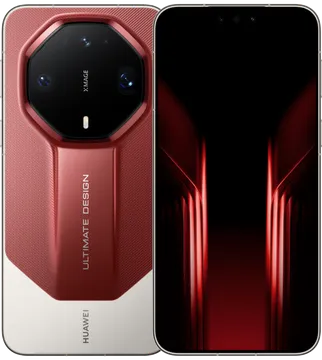 Huawei Mate 90 RS Ultimate Design | 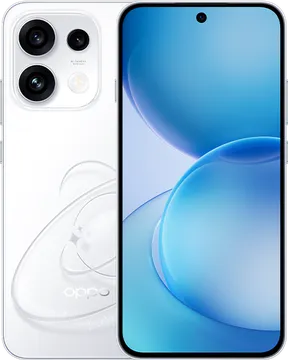 OPPO Reno16c 5G |
|---|---|---|
| Price | From $1,948 | — |
| Body | ||
| Height × width × depth | 164.5 × 78.7 × 8.4 mm | 158.2 × 74.9 × 8.4 mm |
| Weight | 248 g | 195 g |
| Frame | High-gloss titanium | — |
| Water & dust | IP68 (6 m) / IP69 | — |
| Colours | Rui Red (瑞红), Hao White (皓白), Xuan Black (玄黑) | Starry White, Twilight Violet, Stellar Purple |
| Display | ||
| Size | 6.9″ | 6.57″ |
| Resolution | 1320x2848 | 2372x1080 |
| Pixel density | 455 ppi | 397 ppi |
| Aspect ratio | 19.4:9 | 19.8:9 |
| Refresh rate | 1-120 (LTPO) | 120 Hz |
| Peak brightness | 12,000 nits | 1,400 nits |
| Panel | Dual-layer OLED, 1440 Hz PWM, 300 Hz touch sampling, BT.2020 | AMOLED |
| Protection | Xuanwu Kunlun Glass | Crystal Guard |
| Performance | ||
| Chip | Kirin 9050 Pro | MediaTek Dimensity 7300-Energy |
| CPU | — | 8-core |
| GPU | — | Arm Mali-G615 |
| RAM + storage | 16+512 · 16+1TB · 16+2TB | 8+128 · 8+256 · 12+256 |
| Battery & charging | ||
| Capacity | 6,800 mAh | 7,000 mAh |
| Wired charging | 100 W | 80 W |
| Wireless charging | 50 W | — |
| Reverse charging | 18 W | — |
| Cameras | ||
| Main | 50MP variable aperture f/1.4-f/4.0, OIS, RYYB (24 mm) | 50MP f/1.8, 2-axis OIS |
| Ultra-wide | 40MP f/2.2, RYYB (13 mm) | 8MP f/2.2 116° |
| Telephoto | 200MP large-sensor telephoto f/2.6, OIS, macro, RYYB, 4x optical (89 mm) | 50MP f/2.8 (FOV 26°), 2-axis OIS |
| Front | 13MP ultrawide f/2.0 AF + 3D depth camera | 50MP f/2.0 AF |
| Video | 4K (3840x2160) | 4K 30fps |
| Camera & features | ||
| Camera partner | XMAGE | — |
| Optical zoom | 4× | 3.5× |
| Lossless zoom | 8x optical-quality zoom | — |
| Max digital zoom | 100× | 60× |
| Teleconverter kit | HUAWEI XMAGE Z10 module camera (华为睿影 Z10, 1-inch, 24-240mm 10x continuous optical zoom) | — |
| Camera features | 200MP large-sensor telephoto with macro, 18 EV dynamic range main camera (lab), variable aperture f/1.4-f/4.0, Video Log, HDR Vivid video, 20x telephoto video, 4K video | 4K Auto Straighten Video, Dual-View Video 2.0, 4K 30fps rear and front |
| Fast-charging standard | HUAWEI SuperCharge (wired 100W, wireless 50W); 18W wired reverse + wireless reverse | SUPERVOOC |
| Charger in the box | Yes | Yes |
| Fingerprint | side key | optical in-display |
| Face unlock | 3D | — |
| Stereo speakers | Yes | — |
| Headphone jack | No | — |
| IR blaster | No | — |
| Memory card | No | Yes |
| eSIM | Yes | No |
| Satellite | Tiantong satellite communication (carrier service required) + BeiDou satellite messages (mainland China only) | — |
| Special buttons | — | AI Snap Key |
| AI features | — | AI Mind Space, AI Bill Manager, AI Mind Pilot, AI Menu Translation, AI Live Translation, AI Scan & AI Extract, AI Remix Collage |
| Google Play | no (China ROM) | — |
| Other | NFC, NearLink (星闪) E2.0, dual-frequency GPS (L1+L5), 4 numbers (2 nano-SIM + 2 eSIM), 3 active, IP68/IP69, HarmonyOS 7.0, titanium Xuanwu frame, Kunlun glass, dual security chips, emergency call via linked watch | no NFC, IP66/IP68/IP69/IP69K |
| Connectivity | ||
| 5G | — | Yes |
| Wi-Fi | Wi-Fi 7 (802.11a/b/g/n/ac/ax/be), 2x2 MIMO, EHT160 | Wi-Fi 6 |
| Bluetooth | 6.0 (LDAC, L2HC) | 5.4 |
| NFC | Yes | No |
| USB | USB-C, USB 3.1 Gen 1 | USB Type-C |
| Satellite | Tiantong satellite communication + BeiDou satellite messaging (BeiDou mainland China only; Tiantong requires carrier service) | — |
| SIM | Dual nano-SIM + eSIM (up to 2 eSIM numbers) | Nano-SIM + Nano-SIM, no eSIM |
| Software & launch | ||
| OS at launch | HarmonyOS 7.0 | ColorOS 16.0 |
| Announced | 2026-10-01 | 2026-07-02 |
| Released | 2026-10-01 | — |
Questions buyers ask
Huawei Mate 90 RS Ultimate Design or OPPO Reno16c 5G: which has the bigger battery?
Similar battery: 6,800 mAh vs 7,000 mAh.
Huawei Mate 90 RS Ultimate Design or OPPO Reno16c 5G: which charges faster?
The Huawei Mate 90 RS Ultimate Design charges faster: 100 W wired vs 80 W.
Huawei Mate 90 RS Ultimate Design or OPPO Reno16c 5G: which one is lighter?
The OPPO Reno16c 5G is lighter: 195 g, 53 g less.
Huawei Mate 90 RS Ultimate Design or OPPO Reno16c 5G: which is better for zoom photos?
The Huawei Mate 90 RS Ultimate Design zooms further: 4× optical vs 3.5×.
Huawei Mate 90 RS Ultimate Design or OPPO Reno16c 5G: what chips do they use?
Chips: Kirin 9050 Pro in the Huawei Mate 90 RS Ultimate Design, Dimensity 7300 ENERGY in the OPPO Reno16c 5G.
Related comparisons
Huawei Mate 90 RS Ultimate Design vs Google Pixel 11 Pro FoldHuawei Mate 90 RS Ultimate Design vs Huawei Pura X Max Collector's EditionHuawei Mate 90 RS Ultimate Design vs Samsung Galaxy Z Fold8Huawei Mate 90 RS Ultimate Design vs Samsung Galaxy Z Fold8 UltraOPPO Reno16c 5G vs OPPO Find N6OPPO Reno16c 5G vs OPPO Find X10OPPO Reno16c 5G vs OPPO Find X10 EOPPO Reno16c 5G vs OPPO Find X10 Pro Max
Specs from consumer.huawei.com, vmall.com, ithome.com and 1 more official and press pages; price checked 2026-10-27; page updated 2026-11-16.