Compare
Huawei Mate 90 RS Ultimate Design vs Xiaomi 17T
Pick the Huawei Mate 90 RS Ultimate Design for charging, brightness; pick the Xiaomi 17T for price, weight, zoom.
Key differences
- The Xiaomi 17T costs $1,424 less ($524 vs $1,948)
- Similar battery: 6,800 mAh vs 7,000 mAh
- The Huawei Mate 90 RS Ultimate Design charges faster: 100 W wired vs 67 W
- The Xiaomi 17T is lighter: 203 g, 45 g less
- The Huawei Mate 90 RS Ultimate Design has the bigger screen (6.9″ vs 6.59″); the Xiaomi 17T is easier one-handed
- The Huawei Mate 90 RS Ultimate Design screen gets brighter: 12,000 nits peak vs 3,500 nits
- The Xiaomi 17T zooms further: 5× optical vs 4×
- Chips: Kirin 9050 Pro in the Huawei Mate 90 RS Ultimate Design, Dimensity 8500 in the Xiaomi 17T
- The Huawei Mate 90 RS Ultimate Design is newer: 2026-10 vs 2026-06
| Spec | 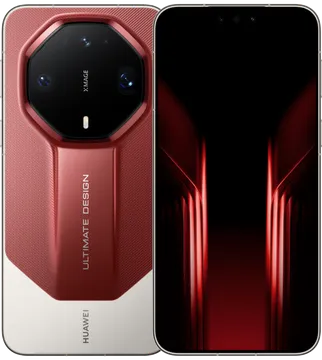 Huawei Mate 90 RS Ultimate Design | 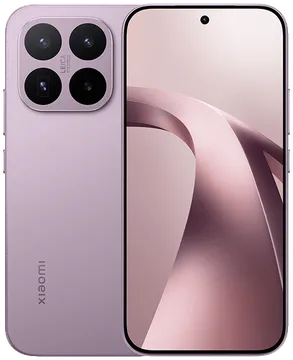 Xiaomi 17T |
|---|---|---|
| Price | From $1,948 | From $524 |
| Body | ||
| Height × width × depth | 164.5 × 78.7 × 8.4 mm | 157.63 × 75.19 × 8.17 mm |
| Weight | 248 g | 203 g |
| Frame | High-gloss titanium | — |
| Water & dust | IP68 (6 m) / IP69 | IP68 |
| Colours | Rui Red (瑞红), Hao White (皓白), Xuan Black (玄黑) | Black (黑色), Ice Berry Purple (冰莓紫), Iridescent White (幻彩白) |
| Display | ||
| Size | 6.9″ | 6.59″ |
| Resolution | 1320x2848 | 1268x2756 |
| Pixel density | 455 ppi | 460 ppi |
| Aspect ratio | 19.4:9 | 19.6:9 |
| Refresh rate | 1-120 (LTPO) | 120 Hz |
| Peak brightness | 12,000 nits | 3,500 nits |
| Panel | Dual-layer OLED, 1440 Hz PWM, 300 Hz touch sampling, BT.2020 | OLED flexible flat, 480 Hz touch, 3840 Hz PWM |
| Protection | Xuanwu Kunlun Glass | — |
| Performance | ||
| Chip | Kirin 9050 Pro | MediaTek Dimensity 8500-Ultra |
| Process | — | 4 nm |
| CPU | — | Octa-core, up to 3.4 GHz |
| GPU | — | Mali-G720 |
| RAM + storage | 16+512 · 16+1TB · 16+2TB | 12+256 · 12+512 |
| Battery & charging | ||
| Capacity | 6,800 mAh | 7,000 mAh |
| Wired charging | 100 W | 67 W |
| Wireless charging | 50 W | — |
| Reverse charging | 18 W | 22.5 W |
| Cameras | ||
| Main | 50MP variable aperture f/1.4-f/4.0, OIS, RYYB (24 mm) | 50MP Light Hunter 800, OIS, 1G+6P |
| Ultra-wide | 40MP f/2.2, RYYB (13 mm) | 12MP Leica |
| Telephoto | 200MP large-sensor telephoto f/2.6, OIS, macro, RYYB, 4x optical (89 mm) | 50MP Leica 5x periscope (115 mm) |
| Front | 13MP ultrawide f/2.0 AF + 3D depth camera | 32MP |
| Video | 4K (3840x2160) | 4K 60fps |
| Camera & features | ||
| Camera partner | XMAGE | Leica |
| Optical zoom | 4× | 5× |
| Lossless zoom | 8x optical-quality zoom | 10x lossless zoom (10X 无损变焦), plus UltraZoom |
| Max digital zoom | 100× | — |
| Teleconverter kit | HUAWEI XMAGE Z10 module camera (华为睿影 Z10, 1-inch, 24-240mm 10x continuous optical zoom) | — |
| Camera features | 200MP large-sensor telephoto with macro, 18 EV dynamic range main camera (lab), variable aperture f/1.4-f/4.0, Video Log, HDR Vivid video, 20x telephoto video, 4K video | 50MP Light Hunter 800 main f/1.7, OIS, Leica 50MP 5x periscope telephoto (115mm), OIS, 12MP Leica ultrawide 120°, 4K 60fps video, HDR10+ |
| Fast-charging standard | HUAWEI SuperCharge (wired 100W, wireless 50W); 18W wired reverse + wireless reverse | Xiaomi HyperCharge; PD3.0, PPS 50W |
| Charger in the box | Yes | Yes |
| Fingerprint | side key | optical in-display |
| Face unlock | 3D | — |
| Stereo speakers | Yes | Yes |
| Headphone jack | No | — |
| IR blaster | No | Yes |
| Memory card | No | — |
| eSIM | Yes | — |
| Satellite | Tiantong satellite communication (carrier service required) + BeiDou satellite messages (mainland China only) | — |
| Haptics | — | X-axis linear motor |
| Cooling | — | large-area cooling with high-density capillary structure |
| Google Play | no (China ROM) | no (China ROM) |
| Other | NFC, NearLink (星闪) E2.0, dual-frequency GPS (L1+L5), 4 numbers (2 nano-SIM + 2 eSIM), 3 active, IP68/IP69, HarmonyOS 7.0, titanium Xuanwu frame, Kunlun glass, dual security chips, emergency call via linked watch | IP68, dual-frequency GPS (L1+L5), 22.5W wired reverse charging, 7000mAh battery |
| Connectivity | ||
| Wi-Fi | Wi-Fi 7 (802.11a/b/g/n/ac/ax/be), 2x2 MIMO, EHT160 | Wi-Fi 6 |
| Bluetooth | 6.0 (LDAC, L2HC) | 5.4 |
| NFC | Yes | Yes |
| USB | USB-C, USB 3.1 Gen 1 | USB-C, USB 2.0 |
| Satellite | Tiantong satellite communication + BeiDou satellite messaging (BeiDou mainland China only; Tiantong requires carrier service) | — |
| SIM | Dual nano-SIM + eSIM (up to 2 eSIM numbers) | Dual nano-SIM |
| Software & launch | ||
| OS at launch | HarmonyOS 7.0 | Xiaomi HyperOS 3 |
| Announced | 2026-10-01 | 2026-06-08 |
| Released | 2026-10-01 | — |
Questions buyers ask
Huawei Mate 90 RS Ultimate Design or Xiaomi 17T: which has the bigger battery?
Similar battery: 6,800 mAh vs 7,000 mAh.
Huawei Mate 90 RS Ultimate Design or Xiaomi 17T: which one is cheaper?
The Xiaomi 17T costs $1,424 less ($524 vs $1,948).
Huawei Mate 90 RS Ultimate Design or Xiaomi 17T: which charges faster?
The Huawei Mate 90 RS Ultimate Design charges faster: 100 W wired vs 67 W.
Huawei Mate 90 RS Ultimate Design or Xiaomi 17T: which one is lighter?
The Xiaomi 17T is lighter: 203 g, 45 g less.
Huawei Mate 90 RS Ultimate Design or Xiaomi 17T: which is better for zoom photos?
The Xiaomi 17T zooms further: 5× optical vs 4×.
Huawei Mate 90 RS Ultimate Design or Xiaomi 17T: what chips do they use?
Chips: Kirin 9050 Pro in the Huawei Mate 90 RS Ultimate Design, Dimensity 8500 in the Xiaomi 17T.
Related comparisons
Huawei Mate 90 RS Ultimate Design vs Google Pixel 11 Pro FoldHuawei Mate 90 RS Ultimate Design vs Huawei Pura X Max Collector's EditionHuawei Mate 90 RS Ultimate Design vs Samsung Galaxy Z Fold8Huawei Mate 90 RS Ultimate Design vs Samsung Galaxy Z Fold8 UltraXiaomi 17T vs Honor WIN Turbo2Xiaomi 17T vs OPPO Reno17Xiaomi 17T vs vivo S60Xiaomi 17T vs Redmi K100
Specs from consumer.huawei.com, vmall.com, ithome.com and 3 more official and press pages; price checked 2026-10-27; page updated 2026-11-16.